Carbon Footprint of Commuting: Transit vs Car (Real Numbers)
When evaluating your environmental impact, few daily decisions matter more than how you commute to work. With climate change concerns driving policy and personal choices, understanding the real carbon footprint differences between public transit and driving has never been more critical. Using official data from transit agencies and environmental studies, we'll break down the actual numbers that show why your commute choice significantly impacts both your carbon footprint and your wallet.
The Real Carbon Numbers: Transit vs Driving
According to official NJ Transit data, public transportation reduces carbon emissions by up to 69% compared to driving alone. This isn't just marketing—it's based on comprehensive lifecycle analysis that includes vehicle manufacturing, fuel production, and operational emissions.
The American Public Transportation Association reports that a single person switching from a 20-mile car commute to public transit can reduce their annual CO2 emissions by approximately 4,800 pounds—equivalent to not burning 2,400 gallons of gasoline. For context, the average passenger car emits about 4.6 metric tons of carbon dioxide per year, while public transit users generate roughly 45% less in transportation-related emissions.
Breaking down the numbers further, driving alone typically produces 0.96 pounds of CO2 per passenger mile, while rail transit averages 0.33 pounds per passenger mile. Bus transit, while higher at approximately 0.64 pounds per passenger mile, still represents a significant reduction compared to single-occupancy vehicles.
Why Transit Wins: The Science Behind Lower Emissions
The environmental advantage of public transit stems from basic physics and efficiency principles. A single train car can transport 150-300 passengers using roughly the same energy that would power 100-200 individual cars. This economy of scale creates dramatic per-person emission reductions.
Electric rail systems, like those used by NJ Transit for many routes, offer even greater environmental benefits. When powered by the regional electrical grid—which increasingly includes renewable sources—electric trains can achieve emissions as low as 0.2 pounds of CO2 per passenger mile. PATH trains, which connect New Jersey to Manhattan, operate entirely on electricity and demonstrate some of the lowest per-mile emissions of any transportation mode.
Additionally, public transit systems undergo continuous efficiency improvements. Modern trains feature regenerative braking systems that capture energy typically lost as heat, feeding it back into the electrical grid. These technological advances mean that transit's environmental advantage continues to grow over time.
Financial Impact: Carbon Costs Beyond Environmental Concerns
Beyond environmental considerations, the carbon footprint of commuting increasingly affects your finances. Many jurisdictions are implementing carbon pricing mechanisms, and employers are beginning to factor transportation emissions into sustainability initiatives and potential incentive programs.
New Jersey residents working in New York City save $3,000-$9,000 annually by avoiding NYC income tax, money that often offsets transit costs while maintaining the lower carbon footprint. When you factor in parking costs—which average $300-500 monthly in Manhattan—the financial case for transit becomes even stronger.
The total cost of car ownership, including depreciation, insurance, maintenance, and fuel, averages approximately $0.65 per mile according to AAA data. For a typical 40-mile round-trip commute, this equals $26 daily, or roughly $6,500 annually. NJ Transit monthly passes cost significantly less while delivering substantial carbon savings.
Location Strategy: Maximizing Transit Benefits
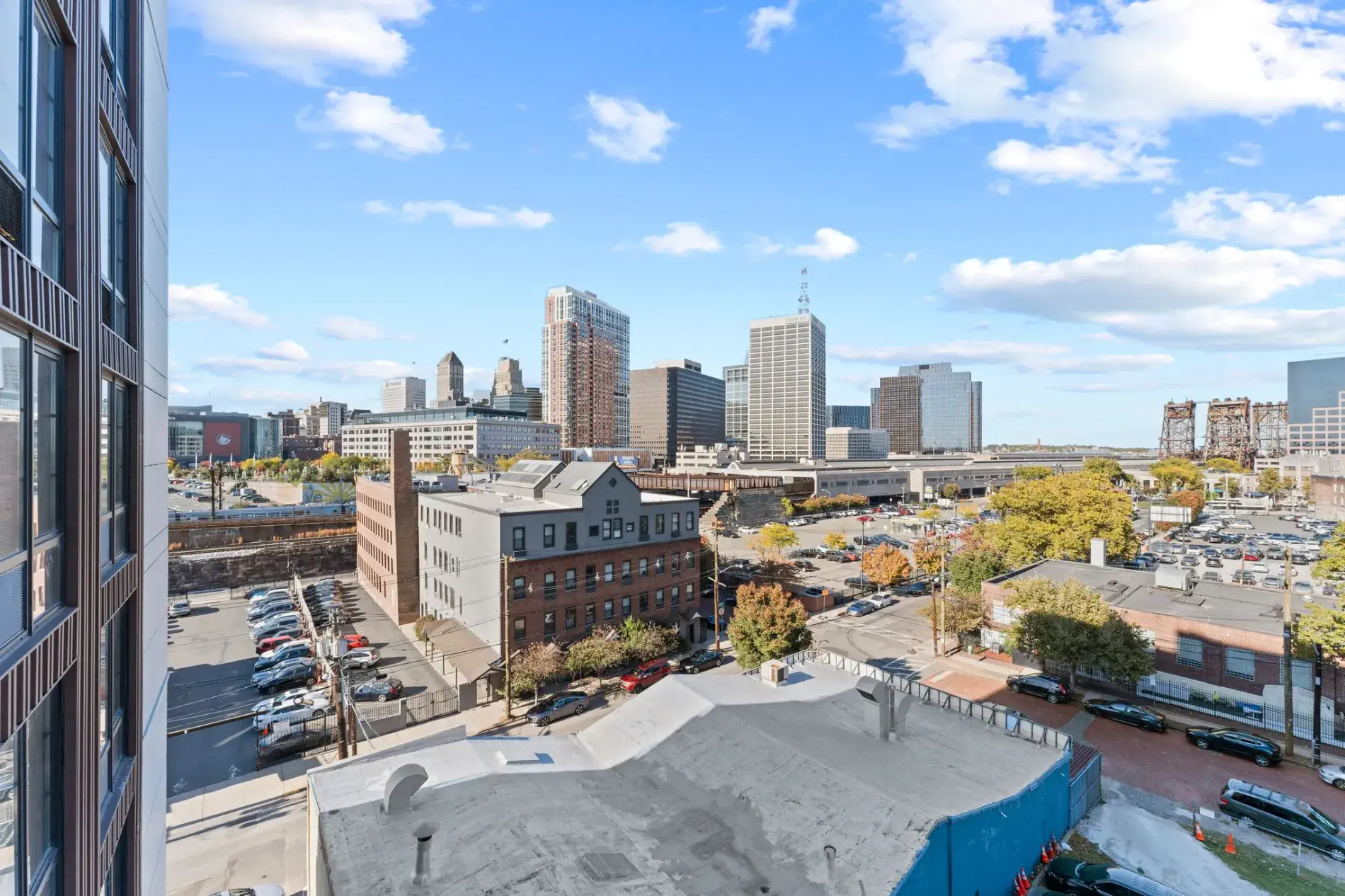
Living within walking distance of major transit hubs amplifies the environmental benefits of public transportation. Iron65, located just 8-10 blocks from Newark Penn Station, exemplifies this strategic positioning. Residents can walk to the station in approximately 10 minutes, eliminating the "last mile" problem that often requires additional transportation.
This proximity enables true car-free living for many residents. With 20-minute access to Midtown Manhattan via NJ Transit and 22-minute connections to World Trade Center via PATH, residents can maintain professional schedules while minimizing their transportation carbon footprint. The new construction apartments in Newark increasingly focus on transit accessibility as a key design consideration.
For healthcare workers, this location strategy proves particularly valuable. Our guide for healthcare workers renting near Newark hospitals shows how transit-accessible housing serves multiple medical facilities while reducing commute-related emissions across various shift schedules.
Beyond Commuting: Lifestyle Carbon Reductions
Transit-oriented living reduces carbon emissions beyond daily commuting. Residents of walkable, transit-connected neighborhoods typically own fewer cars, drive less frequently, and make more environmentally conscious transportation choices for leisure activities.
The Newark arts and culture scene becomes more accessible without a car, encouraging local engagement that further reduces transportation emissions. Cultural venues, restaurants, and entertainment options within walking distance or short transit rides create a lower-carbon lifestyle that extends well beyond work commuting.
Studies show that residents of transit-oriented developments drive approximately 40% fewer miles annually compared to suburban residents. This reduction compounds the commuting benefits, creating a comprehensive reduction in personal transportation emissions.
Future Trends: Electric Vehicles vs Improving Transit
While electric vehicles represent significant environmental improvements over gasoline cars, they don't match the per-person efficiency of public transit. An electric car still requires approximately 0.4-0.5 pounds of CO2 equivalent per mile when accounting for electricity generation and battery production. Even with a fully renewable electrical grid, the resource intensity of individual vehicle ownership creates higher lifetime emissions than shared transit systems.
Transit agencies continue investing in electrification and efficiency improvements. NJ Transit's ongoing infrastructure upgrades include more electric routes, improved energy recovery systems, and integration with renewable energy sources. These improvements mean that choosing transit today positions you for even greater environmental benefits in the future.
Additionally, emerging technologies like autonomous electric buses and improved battery storage for grid integration will further enhance transit's environmental advantages. Early adoption of transit-oriented living ensures you benefit from these technological improvements as they deploy.
The numbers clearly demonstrate that public transit offers substantial carbon footprint reductions compared to driving—up to 69% less emissions according to official transit data. Combined with significant financial benefits and improving technology, transit-oriented living represents both an environmental and economic advantage. As carbon considerations increasingly influence policy and personal decisions, choosing housing with exceptional transit access positions you for a more sustainable and cost-effective future. The question isn't whether transit reduces your carbon footprint, but whether you're ready to make the switch to dramatically lower-emission commuting.